Thursday, August 8, 2013

The Me, Me, Me Generation and Why I have Faith in it

Over the years, a lot has been said about my generation, the Millennials. While I won't deny some positive descriptions have been used, the most notably colloquial description of my generation is that we are the Me, Me, Me generation. Many people, our elders in particular, deem us as overly self-centered, narcissistic, lazy individuals who are selfish and riddled with entitlement. We want, want, want.


Now, I could delve deeper into this claim using research, statistics, articles, etc.  I could, but you also could look that up.  Statistics are and can be good to help aid or detract from an argument. True.  However, this blog thus far has been about deeper, more critically oriented think.  Instead of solely relying on emotion or numbers, I've tried to look at things logically speaking; breaking topics down based on thoughts and experiences.  Thus, I intend to go through with this post without looked at numbers. Instead, I want to write based on people I know or have encountered.  I want to tell you why while many people see my generation in a negative light, I can't help but hold on to hope that we are going to be alright.  Or at the very least, we have more potential than some give us credit for. I believe we have what it takes to move the world forward.


Breakdown

Before I get into why I'm hopeful.  I want to take a closer look at my generation and past generations.  Are we/have we been selfish? Certainly.  I can't honestly deny that fact.  As someone who has really tried to not be selfish, I remember being a kid and wanting certain toys or food or privileges and getting upset when they weren't afforded to me.  I deserved it!  I know people who are still selfish. I'd like to point out that every generation deals with some sort of selfishness.  I don't think we are necessarily an outlier in that aspect. The depth of our selfishness is really what makes us the Me, Me, Me generation.  But seriously, we all have dreams money can buy.  So, before I move on, please note that I understand and accept responsibility for being selfish and am not trying to justify our inherent selfish natures. BUT, and this is a big but, I think maybe we should look at the circumstances more closely because I think it's really important and does play a role.  So, now, follow me on my journey as I travel back in time:

My Grandparents' Generation:

I'm starting here because my great-grandparents came from Poland/Germany/Austria (some mixture of the three, but as my dad delves deeper into our family's history, it seems we are mainly Polish).

My grandparents and their siblings were children of folks who were relatively new to this country and didn't have the education, opportunities, or maybe even abilities to attain jobs that fully-supported their families. The resources weren't available for my grandparents to be truly selfish. They were more worried about trying to survive.  A few tidbits:

My grandma used to tell me about her favorite goat growing up (maybe a lamb but pretty certain it was a goat).  The goat was her pet and she genuinely had feelings for it.  One day after dinner was served, she asked her mother what they were eating.  It was her pet goat.  That's kind of mortifying to think about and I now farm pets face similar fates today, but the fact of the matter is the family needed to eat. Period.  My grandma had no choice or ability to be selfish in keeping the goat.

My great uncle had to drop out of school before reaching high school just to support his family.  Education wasn't on the forefront for him because he knew if he kept going to school, there wouldn't be a future for him to utilize his gained knowledge anyways.  Think about how tough that has to be for a kid.  Dropping out of school and knowing you have to work long, tedious hours for a minimal paycheck that goes straight to your family.  I don't know if my generation could handle that.

Not a real picture of mine, but interesting.

This last tidbit/story always stood out to me:  My great aunt was between the ages of 9 and 13, I believe, when she dropped out of school to help support her family.  She went to work at a factory, but was denied because she was too small.  They actually weighed her and decided she couldn't handle the workload.  What did she do? Did she mope? Nope.  She filled her socks with coins and went back to the factory.  Suddenly, she weighed enough to work there.  Now that's determination!

My grandparents' generation, based on what I know about their lives, was about surviving.  I could go deeper into things, but I think the point has already been made.  Yes, they struggled much more than we do, but it's what was required of the times. They didn't have the resources we have available today.  Their families needed them to be unselfish or they wouldn't have much of a chance to survive. They had to grow up quickly, adapt, and survive.

My Parents' Generation:

As progress was made, my parents' generation had it a little bit easier than my grandparents.  No one in my mom or dad's family had to drop out of school to support the family; however, many did still support the family.  I'm fairly certain my dad and his siblings and my mom and her brother all found some means of income while growing up.  I've heard stories of how siblings in my dad's family would help each other out when they were working. Some tidbits:

My aunt would give my dad a couple bucks to go out every once in a while.

Also interesting to note, car access was limited.  My dad's sister was the first person to drive in his family. My grandma didn't get her license until she was in her sixties.  And even then, they only had one car to share.

My grandma would get sick a lot as my mom was growing up.  Her dad would often work long hours to help support the family and presumably allow my mom and her brother to go to school and not have to endure a similar fate as he and his siblings did (that is, dropping out).  As a consequence, my mom would often have to cook and clean and take on larger responsibilities as a youth.


Another thing to realize is that college wasn't as big of a priority.  Not everyone went to college or could go to college at that point.  Again, they couldn't necessarily be selfish.  I mean they could, yes, but circumstances were different.

While these things happened, though, they did get to have childhoods as well.  My dad will often tell me stories about the adventures he had with his friends growing up. My parents were able to get better educations and better jobs. That generation was afforded new opportunities.

My generation:

I think what's really cool about looking at one generation to the next is how kids become parents and parent based on their childhoods. What I mean is, even in this small scale sample size you can see that when kids grow up and become parents they are obviously trying to give their kids a better life than they had.  It doesn't always work out that way, but I truly believe the intention is there.  I'd even venture to say that my great-grandparents leaving Poland, Germany, or Austria did so to give their kids better opportunities.

Some things to think about for my generation:
While this is not true for everyone, most kids didn't have to worry about getting jobs early.  Some got jobs babysitting, mowing lawns, etc. but parents often made enough money so that we didn't have to even consider getting a job at a young age.

On top of that, many gives enjoyed the privilege of receiving a magical, mystical word called allowance.


My generation has been privileged with great and growing technology.  We've grown up with it and it's become part of us.

Our parents didn't necessarily have a ton growing of things up and many, I'd venture, didn't want us to grow up in a similar fashion.  Maybe it's compensating; maybe is living vicariously. I don't know, but what I do know is that we've been pampered with gifts since we are little kids.

Most families have multiple cars.

Education is at the forefront.  Kids need to and are expected to go to college.  It is no longer become a delicacy, of sorts.  Instead, that's what's important.

Our parents want us to have better lives so our future kids can have better lives.  I think with the way technology, jobs, education, etc. has progressed we've become more susceptible to being selfish.

Instead of playing baseball in the street, it's playing travel to make us better.  Instead of doing chores to help the family, we started getting paid to make our beds.  Instead of trying to survive, we are trying to live luxuriously. Face the facts, the resources we have today are above and beyond what our grandparents dealt with and our parents as well.  Yes, we are a generation about me, but we were also born into it.  We didn't miraculously create it.

I have and I know others who have faced certain struggles, but I don't think anyone has had to deal with those struggles like they did in the past because of technology, resources, etc.  Our parents have tried to take that burden off of us (for the most part). Unfortunately, without that burden we can sometime think innately we must be entitled to the constant attention.  I mean, think about it, kids are getting cell phones, smart phones, before they turn ten years old.  I'll tell you this much, they surely aren't buying the phones!

So, can we be selfish? You bet. But can we please think about the circumstances?  Every generation is going to be mixed with good and questionable characters.  Please try not to pile us all into one group.  I really believe our generation can continue this trend of improvement.

My faith/hope in my generation

I tend to believe that much of this debate comes down to maturity.  Think about it (based on my examples): Our grandparents had to be mature as young children; our parents had be mature as young teens; and us? Well, we really aren't forced to be mature until either some tragedy hits or college.  It isn't the norm now to need to be mature at a young age.  We don't have that sense of responsibility, truly, until college now.  Why? I think that's the first time our independence is truly test (Yes, people get tested early and face difficulties, but I'm fighting against a generalization so I'm using a generalization). Once that maturation hits, I think people really are turning for the better.

Obviously, not everyone will mature in the same sense.  Some people will continue to leach off of their parents' funds, think selfishly, or just be poisonous viruses to the world. But I think my generation has a lot more potential than you think.

Note:  For the purpose of displaying examples, I have pulled four 'tweets' from four people I follow on twitter.  I didn't include their names, but I assure you they're all "Millennials."


I'd like you to consider these four tweets as evidence.  While we grow up thinking about me, I see more and more people my age instead thinking about we or you.  While I know of people who are taking on careers to accrue money and become affluent (which could be beneficial to giving both them and their future kin better living conditions), I see just as many if not more people looking to help others.  Yes, the country is struggling economically, but I see people looking to do more than get money.  I think we're at a point were money is nice, but people are beginning to understand they can live fulfilling lives and make enough to survive on.  

I think my grandparents' and my parents' generations laid a financial foundation for us and while it took us and takes us awhile to realize what they did, we are starting to walk through the doors they've opened and create our own paths.  I think what is particularly neat and interesting about my generation is that they are trying to make a better world.  

Again, consider the above tweets.  Finding fulfillment in teaching and coaching others, questioning what is really important in life, helping others, moving society forward.  

I know many people who have recently graduated and instead of beginning their careers have pursued opportunities to volunteer and teach and serve throughout the country.
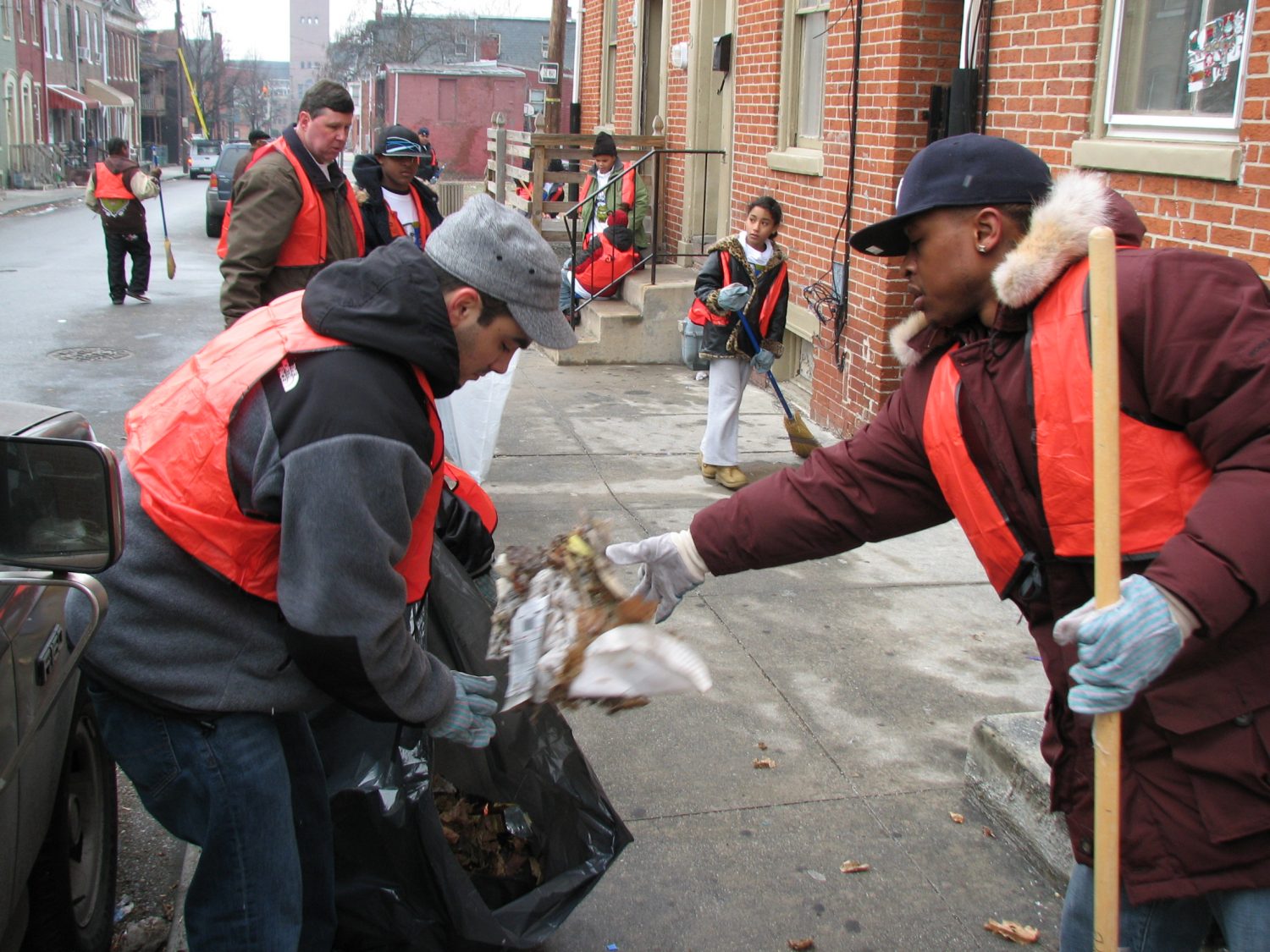


I know people who just want to help others and show them how great life can be.

I know many people who want to be successful so they can help give their parent(s) things they could never afford because they realize the sacrifices that were made.

I know many people who want to lay down the foundation for their future children to grow up in a world that tolerates opinions and people, that loves more and hates less, that's open to dreaming big.

We have the technology, education, and drive to make a real difference.

Are we perfect? No way.  We still struggle with racism, sexism, prejudices, stubbornness, entitlement, etc. You name it, we got it.  But I think you can see a certain progression from generation to generation, and I'd argue that my generation understands this and wants to take it to the next level.  We want to and are willing to make this world a better place.  It won't be perfect but maybe we can lay the foundation down so that our future kin can take it a step further. 

At the end of the day, what I'm trying to say is don't count us out.  We may do things differently from previous generations and our methods may seem unorthodox, but I do think we are figuring things out.  For the older generations, think about when you were in our spot.  I can't believe that your parents thought you were wrong in some of your beliefs too.  Didn't that teach you anything? I hope we can learn and move forward like you did in certain respects.  I know we aren't perfect and we can be self-centered, but I also know too many good people who are destined for great things.  It may take us longer to realize our purposes and potentials, but when we do, watch out.

Thursday, August 1, 2013

Stopping the Negativity: Pondering How We can Live Happier Lives

As always, my mind has been running non-stop lately.  Obviously certain situational factors play a role, but now is not the time to delve into those issues.  Instead, I'll like to write about a thought that has been traversing my mind for some time now.  This past week, this particular thought has cause many sleepless nights.  Thus, I reckon it's about time I write them down.  My gut tells me that this post will be lengthy because I really want to try and attack it from multiple angles.  This topic needs to be fleshed out.

What's the word, bird?

You know what often irritates me? People.  While I try to see every perspective and try to accept other's thoughts, beliefs, and decisions, I sometimes just can't fully grasp what people do. It's frustrating.  I want to get that off my chest now to so I don't sound as preachy.  I'm not claiming to be perfect. I know I'm not. But I have learned and as someone who strives to live rationally, that is based off logic, I'd like to relay my logical argument in hopes that maybe even one person who reads this post will walk away with a gained perspective.

So, what exactly am I getting at here? What exactly do I mean? I basically want to discuss why we need to stop hating people, or at least exerting energy to extend hatred or even general disapproval.  I want to make it clear now, before I really get into this topic, that I am not here to bash political parties, ideologies, etc.  I will bring up various examples, but please take them as examples and nothing more.


On a personal level

I know a lot of people who, myself included, get absolutely flustered and irritated by the actions of other people.  I've touched on this issue in the past, including briefly in my farewell article for Xavier's Newswire, but I'd like to expand on this thought.

This irritation stems from multiple reasons.  It could be the fact that someone is making harmful life decisions; it could be someone is flaking out constantly; it could be that someone is bickering constantly; it could be someone is simply (to you) being dumb.  The list could really go on, but I trust you get the point.

I've been working on not letting these things bother me as much lately and it really does make a difference. I'd venture to guess that for most people, initially at least, the frustration stems from a genuine desire to help.  I know for me that's often been the case.  I have wanted to help people see how detrimental their decisions are or have been.  I often think that if they'd just listen to me I could help make things better.  This initial desire to help often turns into almost an unhealthy desire to control.  Other times, people flat out disappoint you, which may hurt even more.  You find yourself trying to improve or change the situation, but I'm here to tell you that you're energy is ultimately wasted and you actions are often erroneous.  Let me explain:


No matter how much you desire to change someone, you can't forcefully do so.  At the end of the day, a person will do what he or she wants or decides to do (obviously this doesn't include those in particularly precarious positions). I can't, you can't, we can't control others. It's really that simple. We have to learn to let go of our constant need to control.

Although our efforts might be innately good, they are potentially dangerous.  Spending so much energy into something to no avail can be seriously draining.  You can give someone the tools to succeed, but you can not hold his or her hand every step of the way.  Harping over the results, while arguably amiable, only worsens your own self-being.  Someone will only change or improve if they want to.  Forcefully shoving opinions or help down someone's throat gets neither party anywhere.  If the person doesn't want to except it, the advice is in vain.  This results in negative energy being spent being worried or frustrated.  It hurts you in the end. Why erroneously expend energy when you can channel it towards other things?

I'm not saying to care about people or want to help, I'm merely saying know your limits and understand where you stand. It's great to have good intentions, but it's not worth the frustration sometimes.  For instance, I had a friend in high school who would come to me for advice.  Oddly, my advice was received but never enacted into fruition.  Eventually, I had to realize that I did all I could do and the rest was up to him.  It's his decision, it's his life and I have to accept that.  I gave the tools I could. Period.  Before I realized that, it was taking such a toll because I cared so much. Almost too much.

As for the people who disappoint you, LET IT GO.  You're going to disappoint people and similarly people will disappoint you. If they do, let it go. You can't change what happened. It's in the past. Spending negative energy hurts your present superfluously.  Life is too brief to be constantly thinking negatively and worrying about who said what or who did what.  Move on.  If a person continues to disappoint you or continuously fails to live up to your expectations, MOVE ON.  Eventually, you need to realize some people just aren't worth the energy.  There are too many good people out there and too many positive experiences to be had to worry about someone.  As I alluded to in my previous post, people come and go. So, if you lose a friend along the way, don't fret. It happens.  Getting mad or doing something you'll regret is never worth it.  The best revenge is to live a happy and fulfilling life.

Post Writing Interjection: If someone does disappoint you, make sure you tell them or they will never know or learn.  By me saying let it go, I'm simply implying let go of the negative energy because it happened; however, I thought I should clarify I'm not implying you should simply move on because that will just make an isolated situation grow into constant frustration.  Discuss, talk, debate. Just don't get caught up in constant negativity.

On that note, if someone does stop talking to you or someone does something irrevocably wrong let it go.  I get it, we are prideful, passionate beings.  We want to stand up for what is right and we want to show up those who wrong us.  In the end, though, is it worth it? What really are you going to accomplish from getting upset.  Really, that person wins because not only do they do something against you but they also are able to rule your mind and emotions.  While it won't always work out this way, usually life has a tendency to work things out.  If a person is truly wrong, won't he or she receive what he or she deserves in the end?  Someone doesn't want to be your friend anymore? Their loss.  Someone harms you? Natural law will take care of that.

I just feel like we need to stop the notion that we can avenge everything ourselves.  It rarely ends up good and often time takes away from the real positives in our lives.  It's just not worth it.

Okay, I don't want to get super religious on you but I'm going to say something and leave it at that: I believe that God exists.  Based on that notion, it's easier for me to let go of disagreements.  Like, if someone has a different ideology than I do.  The way I see it, if said person is wrong, he or she will know in the end. Same with me.  We choose what we believe as right and wrong but that doesn't mean we are right or wrong.  We believe we are right. We have faith we are right. But we can't TRULY know until we meet our maker. Right? So, why waste your energy belittling, demeaning, or getting mad at others? Enjoy people for the positives they bring into your life. If we only concentrate on the negatives, they'll devour us like poison. Then, what good is living a life where you're always getting in arguments? I'm sorry, but I can't imagine that's our purpose.  I hold onto hope we are alive for more than that. Which leads me to...

Groups/People/Organizations/Etc.

I was initially going to break these down, but I think I've established enough to where I can wrangle the general idea of groups together.  In a similar sense to individuals, people often find conflicts with others.  To me, at the end of the day, it's really kind of silly.

Before I expand, let me clarify a few things.  I'm not sitting here trying to say you shouldn't have beliefs or opinions or qualms with others.  Holding onto beliefs and ideals give us identity.  They help form the makeup that creates our individuality.  It's a necessary aspect of life.  I don't think we'd have free will if we couldn't have differing opinions.  So, if you feel strongly about something, keep on believing. Keep on supporting.


My question is simple: Why do we fight so much? I understand there are disagreements, but it doesn't make sense to spend so much time arguing.  For instance, a liberal and conservative.  I've witnessed some pretty intense debates and fights between the two parties.  I think it's fine to discuss difference.  A healthy debate helps drive thinking forward.  But, when people spread hatred and fighting endlessly over it. Why?  What is that going to solve?

People have a right to have their views. Respect that.  On the note, why get so flustered about things you can't control?  For instance, a lot of people constantly bashed President Bush when he was in office and the same goes currently with President Obama.  While you may not agree with their actions, I beg you to stop being so damn negative all the time. Roll with the punches. Here's the deal: These men were elected. Period. You didn't/don't agree with them? Okay, that's fine. But, tell me, what does spreading hatred/bigotry/etc going to do to improve the situation? Nothing. The elected official, at the end of the day, is still in charge. I feel like if we spent less energy trying to demonize everyone or debate who is more correct than the other, we could actually make some positive improvements in this world.

Same goes with certain issues like equality, gun control, etc.  People are going to feel what they feel. People are going to want what they want.  Why get so uptight about it? It does no one any good.  At the end of the day, you aren't going to change them.  People will love who they want. People will buy what they want.  Being bigots, on either side of the fence, does nothing.  It's just a bunch of wasted energy.

Post Writing Interjection: I know I basically said something along these lines, but I again want to ensure I clarify.  Sometimes people have to do things to fight for what they believe in.  I'm not saying you should stop believing or working towards attaining goals.  Instead, I'm simply wondering why we let what others are doing drive us so bonkers.  In certain instance, yes, it will effect the population as a whole, but if it isn't really directly effecting you (really think about that) than why are you spreading negative feelings.

For instance, there was recently a big controversy about an author who happens to be Muslim writing a book about Jesus.  The author is a religious scholar with a PhD who has studied and researched for over 20 years, yet on a Fox News interview all they could ask him was what kind of right he had to write the book and how invalid the book must be because he is Muslim. What was weird to me, though, was while the interviewer seemingly attacked the author, I just found myself curious enough to read the book, which seems counterintuitive to their goal.  If they didn't agree with it, why promote it?  To each their own, I guess. I just want to know where the constant bickering (that isn't innately productive) gets us?

Again, as someone who believes that God exists, I can't help but leave the ultimate judging up to Him.  While I know and understand the Church's teachings, who am I to interpret what is right and what is wrong? I feel like those people will learn if they lived the correct life after death.  Judging harshly, making other's live's miserable because I don't agree with them or I think I know what is right and wrong doesn't allow me to live a life of impact.  Instead, I'm wasting my energy by unnecessarily terrorizing who in the end is either going to be punished or rewarded for the life they lived.  Logically speaking, again, I just don't see how getting mad at everyone who disagrees with us is how we are supposed to live our lives.  If you believe in God or a God, do you really think people were put on this planet so others could demean them for being different? Does that really sound like a loving being?  Disagree all you want, but why turn to being ruthless to others.  It just doesn't make sense to me.

I almost see it as an expanded Paschal's Wager.  Where many of us are decided to wager that our beliefs are true instead of having our beliefs and accepting the fact that others have beliefs.

I know I said I didn't want to go too much into religion (and I don't think I have really besides stating my belief in the existence of God) but this even follows religion.  With so many religions out there, how do we really know who is right and who is wrong?  It doesn't make logical sense to me that a loving an ultimately, singularly "correct religion" exists.  If that is the case, well shoot a lot of people are screwed!  Again, though, why let that bother you? What can you REALLY do about it? (I really wish we could take a step back and consider that). We preach love, but the moment someone has a different stance we act hate. Furthermore, have you ever stopped to consider that some people believe in certain things because it was the life they were born into? Yes, we have a chance to be educated and make our own decisions, but our foundations is fortified during our youth and often times carries throughout adulthood.  This is a way to say blame the parents, I'm just saying consider the unlimited combination of backgrounds someone can come from.

It just seems to me that we have so much potential for greatness, so much energy, but we wastefully exert too much worrying about ultimately unimportant things.  Our pride can get in the way.  We could be spending the energy making a positive impact. We could be spending that energy enjoying life with friends, family, others, and strangers alike. We could love fully and rid ourselves of the hate. There's enough of that going around, we don't need to add to it.

Quick example


The other day someone posted a link online that I found humorous yet coincidentally relevant to the post. Click the link here.  Basically, it's a bunch of pictures that show two churches speaking to each other through sings, debating whether or not dogs go to heaven.  It matters not their denomination. Instead, I just found it so interesting how one church got so frustrated by the outlandish claim that dogs could enter heaven while the other church just tried to preach love and then found witty and humorous ways to respond, ending with "All rocks go to heaven."

Conclusion

Post Writing Interjection: I know this post has probably been redundant at times, but I think I was/am just trying to drive home the point.  Sometimes, if it isn't repeated it can get lost in translation.

I guess, though this fairly robust post, what I'm trying to get at can be summed up as so: Let's try to control what we can, let go what we cannot, and replace the negative energy with positive energy.  It's great to have a passion for beliefs and a passion for life, but sometimes we get lost in that passion and forget the bigger picture.


Is what I believe correct? I can't say.  Are you wrong? I'm not positive.  Will my words matter? It's to be determined.  I know for myself, at least, I will try to let go of the dead weight and enjoy the great people in my life as much as I can.  I know I won't agree with everyone, but who is right and who is wrong will get settled eventually.  I'll provide tools when I can but it's up to the world to use them for the right reasons (whatever those reasons may be).  We talk about what's right and what's wrong, but do we truly, one hundred percent know for sure? It seems to me like we can't.  Whether you believe in God or not, we came to this earth somehow. Don't you think whoever or whatever started this whole life thing should have a say, besides in written texts, definitively what's right or wrong?  Faith is important, definitely, but so is remembering to conquer our hatred.

I just hope that maybe, just maybe, we can live happier lives and allow others to live the lives they choose. Isn't that what we want at the end of the day, anyways?  Just a thought.

Wednesday, July 31, 2013

Saying Goodbye: Thinking about the Vicious Cycle of Friendship

This weekend, specifically Saturday, I will be going to Indiana to help send off a friend as he sets off for his next adventure in California.  It's going to be an enjoyable time because we always have an enjoyable time when together, but boy it's going to be tough to say goodbye.  Since meeting our freshman year of college, we've accrued countless memories.  I'm now going to briefly review some memories, but it's all leading to a thought so bear with me.

I'm going to be saying goodbye to the guy who would randomly sing and dance with me at will.  Heck, him and I even entertained our friends during senior week by dancing non-stop while they sat for a break.  The best part: without practicing we somehow generally manage to get in-synch at some point.  On top of that, we broke into a sterling rendition of "Blue Moon" for a couple of hall mates as they walked down the hall one day.  Not rehearsed, but perfected.


I'm going to be saying goodbye to the guy I would spend my afternoons with freshman year playing Wii sports or Call of Duty.  Boy, those were some intense battles golfing.

I'm going to be saying goodbye to the guy that I would go to the cafeteria and eat until we could eat no more.  We just didn't care.  One time, we went to see just how much we could eat and piled plate upon plate.  Other times, we'd sit in the cafeteria and enjoy intellectually driven debates and conversations.  It's always been about respect.


I'm going to be saying goodbye to the guy I played basketball, ultimate frisbee, and various intramural sports with throughout college.  His competitive nature and drive to be the man would often drive me crazy but at the same time our games would mesh so well.

I'm going to be saying goodbye to the guy I'd sit up late with and just talk about nothing and everything all at once.  We would talk about our presents, pasts, futures, worries, thoughts, frustrations, and everything in between. We just understand and respect each other, for the most part. One time, we stayed up while trying to figure out what drives my sleeping problems.  (We're also both insomniacs).

I'm going to be saying goodbye to the guy who is my beer pong partner.  We would often take turns carrying the team. Teamwork, baby.

I'm going to be saying goodbye to the guy who shares my passion for music.  While our musical tastes at times don't align, we could always rally around the classics and oldies.


I'm going to be saying goodbye to the guy who has genuinely become one of my closest friends (which is ironic because I've always made fun of him for his use of "one of my best friends).

I could go on, but you get the point. Well, maybe you don't.  Yes, I'm kind of having a moment of shit my friend is leaving, but it's more than that.  Some of you may be thinking if you're that close you'll stay friends.  You know what? I absolute will try my best and hope that is the case.  However, experience tells me otherwise.  Hopefully, at this stage in our lives, where we are a little older and (a little) more mature, things will be different.  Let me explain.

Cycle of Life

Thinking about his impending departure made me recollect the various friends I've had over my life.  It seems like with each new stage we are forced to start over again. Sometimes by choice; other times not by choice.


For instance, I remember having great friends during pre-school.  I distinctly remember going to their birthday parties and worrying frantically when one broke his collarbone during recess.  Once kindergarten hit (we went to different kindergartens), I never saw them again.

Throughout elementary school, I had a ton of friends--a few closer than others.  I considered some of these people my best friends and thought about our futures together.  When high school hit, I seemingly lost those friendships that I thought would thrive.

In high school, I again started over.  Yes, going to a new school obviously didn't help but it still was a new stage in my life.  A chance to start over whether I wanted to or not.  I met many people in high school and again made some close friends. Then came college.  While I still keep in contact with some friends, it just isn't the same.  I don't talk to them like I did, and I don't see them like I did.  Yes, I still maintain friendships and I know others do as well, but I think you'd agree that it just isn't the same.  My best friends from high school? Yeah, they don't even talk to me anymore (not sure why).

It even happened in sports.  Like when I played travel soccer for years, many times year round.  I made some friends there and thought it meant sometime, but everything fizzled after I left the team.

Now we have college.  Once again, I started over and met a new batch of friends.  I've had some really tremendous experiences with them and hope to continue the friendships. Life isn't that simple though.  Still unsure of where I'll be next month let alone next year, I can't guarantee the same friendship will be there.  Sure, texting and Facebook make things easier to stay in touch, but if you aren't in close proximity to where you can really see people often, friendships fade.  You're still friends, but those people are out making new experiences with a new group of people.

I think it's another interesting aspect of life.  You are constantly given the opportunity to reinvent yourself or learn from your mistakes.  I will note that I don't really think a person ever necessarily changes.  I think someone's core is always intact, but certain aspects can alter.  If we didn't learn and adapt, we would never survive.  So maybe learning from past mistakes in friendships will help these new ones or future new ones thrive.  At the end of the day, all you can do is try.

I could see some of you saying at this point, Robert, maybe you just didn't try hard enough to maintain your lost friendships. You know what? You're probably right.  I'm sure there was more I could have done, but it is a two-way street.  You can only live in the for so long though.  Past memories are great but new memories keep the fire of friendship burning.

The way life works is really bemusing at times.  To think about how you can experience so much and lose it all in the blink of an eye.  Obviously, it's a cycle of learning experiences, I think at least.  What I'm trying to relay is that I'm tired of this cycle.  I get its inevitability, but I'm getting tired of starting over.  I'm not against making new friends; there are too many interesting people out there to shut the door on new friendships.  What I'm merely saying is I don't want to lose my current friends.  I just can't help but wonder if it's inevitable.  Not just this friend, but the others too.  Currently, I'm still in Cincinnati and can see friends who reside here, but I wonder what will happen if I move back home.  Will things change? Probably.  You'll always have the past and I know I'll always be able to see this friend or other friends and have a good time.  It'll just become so temporary, which is a scary thought.


I'm not sure what the solution to this problem is or even if one exists.  My best guess is to try harder.  If you want something or want to sustain something, you have to work for it.  Life doesn't just decide to take it easy on us (usually).  For as long as it takes to build friendships, they can fade much more easily.  It's kind of like trust in that sense.

To clarify, many people will maintain long friendships.  Proximity (as I've said) is a huge factor though.  I think it's slightly more difficult now than it was for past generations because we go all over for schooling while typically (at least from what I can tell) many people used to go to school in the same area, which allowed them to continue friendships more easily.  So, it can be done and will be done.  There just seems to be a high frequency of unsuccessfulness.

I know life will go on.  I know this sometimes vicious cycle will continue.  I just sometimes wish it was easier to stop it.  It's not though, and that's what makes life so interesting.  You must stay on your toes at all times.  You must enjoy every minute, every second because you just don't know how long the times will last.  I'm happy to say I've really tried to soak up the good times and will keep them in my memory if nothing else.

So, Brian, I guess this post is my pre-goodbye to you.  I'm going to miss you my friend.  I know you're about to do great things because you're competitive nature won't let you do any less.  Just make sure to keep your head up, sing often, smile infectiously, stop shooting so many threes, and never stop randomly dancing (remember, it increases happiness!).  I look forward to the challenge of continuing our friendship, and while I know you'll get new friends and have new adventures, I look forward to future adventures when life allows our paths to cross again.

All the best,
Robert L. Lisiecki

Thursday, July 25, 2013

Supplementing Activity: Achieving Success with Your Active Role

Since I missed posting a new entry last week, I thought I would give you an additional post this week (don't you feel special).  Plus, this notion will play a somewhat supplementary role for this week's previous post.  Quick recap: I wrote earlier this week about taking an active approach to life.  More specifically I preached (although I don't intend to necessarily sound preach but instead ponderous) about taking action to get what you want or improve your life instead of passively hoping luck falls your way.  I think it's important to stress that just because you actively attempt to change your life for the better doesn't mean you necessarily will. We all have our limitations so even if we work hard failure can creep in; however, I'd surmise you stand a much better chance of improvement by working at it rather than presuming impending failure.


I'd like to discuss ways to improve the chances of success when taking such an active approach because I think how you do something is just as important as what you do.  I've spoken with my family about the strategies this past week and they are something that have been on my mind a lot recently.  I think what's most interesting is how many times we know and understand information, various strategies, "truths," etc but we don't implement them.  Personally, conceptualizing is such an easy task but turning the concept into action is much more difficult than it seems.  Sometimes you just that external push to get you going.

I sometimes think this blog serves a dual purpose.  Let's be serious, it does serve as a dual purpose.  Not only do I get to write about interesting topics, but I also have space to almost regurgitate the millions of thoughts constantly fluttering through my mind.  Now, back to the task at hand.

Micromanaging

I often talk about the bigger picture. I will reference looking at the bigger picture; thinking about the bigger picture; considering the bigger picture; etc.  At times, taking this mindset is vital for ultimate fruition.  For instance, taking a minuscule, trivial spat and looking at the bigger picture of the relationship before blowing it way out of proportion is necessary.  On the other hand, for today, when looking to do something productive or make a really good change we need to look at the puzzle pieces before we can finish the puzzle.  I don't really recall hearing micro and macro used often other than in economics, but I think they are necessary words to consider here.  We need to learn how to micromanage tasks.

To clarify, by micromanage I mean break down into more plausible steps.  It's necessary for me to define that before I get too deep because you could be carrying a different notion, which would make the rest of this thought process bemusing.

So, what do I mean? I think one of the biggest obstacles to making a positive change or taking an active role is that we make it out to be a big obstacle.  Instead of seeing something as a series of manageable events we sometimes consolidate the whole notion together, which makes it appear inevitably bound to fail.  But we must learn to break it down.


As you know from a few posts ago, my cousin recently got married (WOO!).  The wedding is still fresh on my mind so I would again like to use her as an example.  Normally wedding planning is a big deal.  As in, people freak out because there is so much to do! (Note: I'm not sitting here trying to discredit the stress wedding planning brings).  Here's the deal, though. Generally speaking, the future bride and groom have a year plus between engagement and saying I do.  Many people will look at that and think about all of the tasks they need to accomplish in such a short period of time and it becomes overwhelming and drains the underlying happiness and excitement it should bring. I know this example is weird, and possibly precarious, but it works for my point because...

While I can't speak for her, it appears my cousin really micromanaged her wedding.  That is, she broke it down into bits and pieces that were much more easily manageable.  She got things done and planned as they needed to, figuring out important things first and letting the rest follow.  I really never saw my cousin overly stressed about the wedding because she managed it so well.  In fact, she was nearly done with preparations almost a year before she tied the knot.  Her and her now husband took control of the matter and didn't let it control them.  They broke down the behemoth of planning in to manageable minions of tasks. By doing so, they didn't necessarily overwhelm themselves and the process became much more efficient..

Another example, and maybe more easy to relate with, would be learning an instrument; say the guitar, for instance.  You aren't going to simply pick up a guitar and learn it in the same day.  If you're some prodigy, you win, but for us simpletons it doesn't work like that.  If you except it to be that easy you have another thing coming.  Instead, we need to learn to break it down into goals.  As in, today I'm going to learn how to tune it properly. Or, today I'm going to learn how to hold it or strum it properly. Then learn to play a key, then a chord, then a song, etc.  Breaking it down in the manner does two things.  First, it makes the task much more manageable to where you are gaining levels instead of trying to conquer the entirety of the situation.  Secondly, it gives you a sense of accomplishment and keeps you motivated as you go along.

The same could be said with organizing a room.  Can you do it all in a day? Most definitely,  However, thinking that you have to do it in one sitting could cause you to prolong the task or not do it efficiently.  You may just move the disorganization to another room or do it inefficiently.  Instead, I posit it'd be much easier and more efficient if you broke it down into something along the lines of, "Okay, I'm going to solely focus on this area."  You might not get it done at one time but it suddenly becomes more manageable.  If you break it down you will see the improvement in front of your eyes and your success rate will succeed.  This point brings me to something that is absolutely, undeniably crucial.

Consistency

Micromanaging, I think, helps makes tasks easier in the long run, but consistency is key for ultimate success. These two things coupled together make a powerful team.  If something is broken down into more manageable portions, you are more likely to keep doing it.  How do students do well in school? They study often. How do athletes (naturally) stay at the top of their game? They train and practice.  How do chefs become five star restaurant head chefs? They cook often.  People don't improve overnight.  Your life isn't (minus the obvious exceptions) likely to change overnight.  Things happen and people change because of consistency.  You have to have the moxie to keep at it.


I'd like to share a story I heard from a YouTube video (I've already told my family this a few times, I know).  This guy's wife went to a fitness class and saw a man there who was in the 300-350 lb range.  She said he could barely walk, was breathing heavily, and didn't look like he'd make it.  After one class, she thought about getting him kicked out because she worried his health would be a liability for the class.  The next day, she saw him again, struggling to keep up, swaying back and forth.  The woman (the storyteller's wife) ended up not going back to the class for another year (he never explained why).  When she went a year later, she noticed the heavy man was no longer in the class.  It took her until the end of the class, but she eventually noticed that the once 300-350 lb man was suddenly well over 100 lbs lighter.  He was transformed so much that he was one of the top performers in the class and nearly unrecognizable to the woman.  The key? Consistency.  Every day at 6 p.m. the man would go to the class.  He didn't make excuses, he didn't give up.  Eventually results happened thanks to his mettle and consistency.  That's so awesome to think about!


If you make something too grandiose, it's really hard to stay consistent.  This guy didn't all of the sudden become a workout warrior.  Instead, he found a class, one class!, and stuck with it.  If you want to make a change, you have to stick with it. Period.  I just think breaking it down and making it manageable makes it easier to keep the consistency.

We can gain a skill, we can learn something new, we can change your life.  We just have to be persistent.

Bonus fun

Nerd alert: I've recently been reading some exerts from a book titled, A User's Guide to the Brain. It's really quite interesting, and I can't help but think one tidbit of information from it is really relevant to this post.  The brain is a very malleable entity; meaning it has the ability to change and grow.  We have the ability to develop new neural connections, which allows us to form new memories, skills, etc.  Interestingly, though, we sometimes don't give the brain a chance to truly fortify these new connections.  According to the book, which is written by a neurologist, if you spend an amount of time learning a task, you need to allow your brain time to cement what you learned.  If you go on to something that's equally mentally strenuous or stimulating, you run the risk of not properly immersing what you learned into long term memory. For instance, I believe he used an example of trying to learn a sport like soccer then going right from that to trying to learn lyrics to a new song.  The movements soccer requires won't become as natural if have conflicting interests within your brain as opposed to allowing it to really soak in the information. Point at hand: Don't overdo it.

That seems to back up the notion that we need to break things down.  For one, it saves us time.  For two, it seems to be more efficient.  And finally, it affords us a better opportunity to retain and succeed.

Conclusion


Yes, certain things can be done right away and all at once, but those aren't the things I'm talking about.  It might be hard to conceptualize breaking things down because you think you can do more but think about it this way.

If you spend twenty minutes daily (yes, everyday) learning the guitar, you have a couple things going for you.

  • Twenty minutes is manageable and doesn't take out a large portion of your day.
  • You consistently work with the guitar, which allows you to develop a comfortability with it.
  • While it will take time, you will be taking things in stride and allowing yourself to retain what you've learned.
  • You will gradually see results. Tangible results.
You could spend more time or less, but the key is finding something that will prevent you from the dreaded excuse or procrastination.  It just makes sense to me that these items allow people to really take an effective active role in finding improvement.

Could I be wrong? Of course.  I think it's worth a shot though to find the working formula and be an active player rather than sit on the sidelines as others pass by...

Tuesday, July 23, 2013

Activia: Conquering Entitlement and Improving Your Life

Do you ever think about how entitled we can be some times?  Like, to almost an appalling degree. We can become pretty egregious with our incessant belief that things are owed to us. As in, we should be afforded all of our wishes rather than earn them. It's human nature, I suppose.


On that note, I'd like to discuss something that I believe is probably overt but may often fail to recognize.  It is always nice to be reminded of certain things every once in a while.  I mean, the brain carries so much information its bound to store some away in the deep corners, which can leave us in the dark.

Importantly, I want to talk about being active in your life rather than taking a passive approach.  "But Robert, not everyone has that type of personality!" Yes, I know, not everyone likes to take the active role. Some people are totally fine riding in the passenger seat.  Some people are just more naturally vocal and evocative while others prefer relative anonymity.  I've seen and I know plenty of people who fall within the spectrum.   I'm not talking necessarily about personality types, though.  This post is intended for everyone--myself included.

I'd venture to guess that at least once you've heard someone described as a "go-getter."  Honestly, I think my people could use an injection of such an attitude.  Many times, we want things but don't want to work for things.  This notion brings back the sense of entitlement we exhibit. Let's face it, having things fall into your lap is much easier and less strenuous than working towards something.  Some people are lucky and afforded a position in life where things fall into place.  Some people are born into a wealth of resources and have their lives mapped out for them.  Luck strikes; however, luck strikes (more often) the prepared.

Allow me to throw out a trite example to help paint the big picture: Steve Jobs.  Steve Jobs had a vision for his life; he had a vision for where he wanted his life to go as well as where he didn't want his life to go.  Not only did he have a vision, but he took an active approach to fulfilling that vision.  He didn't wait for the opportunity to arise, he grabbed the opportunity by the balls and said, "You're mine."  He helped create Apple, the wildly successful company that has turned customers into cult members.  What's particularly interesting about Jobs is his journey.  Fun fact: At one point in his career, Jobs was actually fired from Apple. That's right, the founder of the company was not seen as "fit" for the vision of board members.  Instead of sulking, what did Jobs do? Oh, nothing too huge, he just helped establish Pixar.  Yes Pixar, one of the best known CGI animator and Motion Picture studios.  No. Big. Deal. Oh wait, very big deal.  Again, life threw him for a loop but he took an active approach.  Eventually, Apple realized their mistakes and took Jobs back, which lead to their current monumental success.

People are blessed with a variety of personality traits.  While we may share some traits, we differ from each other person in some way, shape, or form.  While you may not be a vocal person, I believe you (everyone) should be an active person.  Life isn't going to miraculously hand you its riches. Okay, it may, but even lottery winners have to buy tickets.  We need to step aside from the entitlement and step towards this active approach.

If you want to better your health, make lifestyle changes, eat better, exercise more.  If you want to learn a new language, take classes, get materials, etc.  If you want to change your career, find the best way to do so. Granted, you will fail, you won't always get the results you hoped for, and sometimes it will be tough to stay motivated; however, you stand a much better chance at attaining your goals by working for them rather than waiting.

The key is to DO. Consistently make the conscientious choice that "this is my life and I will determine the path it takes."  Stop waiting.  The problem is we too often want to wait until tomorrow.  Unfortunately, TOMORROW NEVER COMES. Tomorrow is always the next day, if you think about it.  It reminds me of an anonymous quote that I can never seem to get out of my head: "Today is the tomorrow you worried about yesterday."  Tomorrow is a fickle domino waiting to tumble into a time vacuum that becomes a month, a year, a decade, etc. What we have is today. Here and now.

Honestly, knowing that you take the reigns of your is just so fulfilling too.  Let me give you a quick, silly example.  The other day, I was thinking about how frustrating it was that I keep losing my workouts.  So, I decided to gather all of the pieces of papers with workouts I've accrued and kept and entered them into a spreadsheet. I now have the peace of mind that I won't lose them.  It's trivial in the grand scheme of things but I took the active approach to preserve something important to me. Deep breath now.


I get it; we all need down time and time to take a blase approach with life.  It's just that life is so precious and volatile, it is hard to determine the extent in which we will have it.  Don't you want to make it the best life possible? Don't you want to make the best you possible?  Life's hourglass is slowly filling with sand, it isn't waiting for you. Why should you wait for it?  Maybe you're happy with where you stand and where you're at. If so, congratulations.  I'm just saying, don't sit here and complain that something is owed to you.  Life owes you nothing.  Instead, it's time we grab what we want.  I know I need to remind myself that sometimes because I often get caught in the current of complacency.  I want more out of my life and know I need to get it myself.  People can't hold your hand forever.  It's time we actively pursue our dreams and desires.  Look at the people who have.  Many successful individuals got to their enviable positions through hard work, consistency, and dedication.  They played active roles in their lives.  Yes, some people were given fortuitous or providential hands upon birth, but at the end of the day it's what you do with your hand that determines your ultimate outcome.

I believe you have the power to positively change your life.  It's time you start believe too.  Your better tomorrow starts today.

Wednesday, July 10, 2013

The Ballad of Love and Hate: Questions about Marriage

One topic that has always and will always fascinate me is love.  What a powerful and interesting word.  Undoubtedly, I think I'll tackle it from various angles while this blog continues to exist.  I just think it's too big and powerful to condense into one viewpoint.  On tangent with the topic of love is marriage.  As they say, first comes love, then comes marriage...


http://img0.etsystatic.com/007/0/6717365/il_fullxfull.385992248_fo7u.jpg

As an insomniac and somewhat introvert, I am constantly thinking.  The concept of marriage is one topic that continuously arises in my thoughts.  A while back, one of my Facebook friends posted a series of questions regarding marriage.  One question asked: "Someone told me to get married young to get the first one out of the way. Thoughts?"


Initial response: What a cynical view of the world.  Can you blame him though?  I mean divorce rates are through the roof.  Plus, marriage is such a long term commitment. Do we even believe in it anymore?

In a little over a week, I will be home celebrating the long term commitment of my cousin and her fiance.  I think their impending marriage will help me delve into the concept of marriage.

Where to start? Where to start?

I think one of the greatest, most interesting, and simultaneously worst aspects of life is how inconsistent it is.  Something that works for one person doesn't necessarily work out for another person.  It really keeps you on your toes because you honestly never truly know the outcome until it happens.  Thus, like most topics, marriage is such a tricky concept to pigeonhole.  Parameters can't precisely be set because I just don't think it works that easily.  I will say, though, certain things should be considered when taking that step.

I'd like to start with that thought-sparking question and kind of work my way around from there.  Wanting to get married early to get the first one out of the way is such a defeatist attitude.  Again, I get the opinion because of divorce rates, but I just think it's a terrible approach.  Initially, I think it's difficult for many people because our parents and grandparents historically were married at early ages.  So, people my age often freak out that they aren't married or on the verge of marriage yet (like my brother at times).  So, there's some initial pressure.  Couple that with divorce rates and of course you want to "get it out of the way."  That statement, though, insinuates a key point: the second marriage will be better, presumably.  Why is that?

Fun fact of the day: psychologically speaking (in a scientific sense) our brains aren't fully developed until the age of 25.  Think about that: you  are still mentally growing and maturing until that age.  You don't "peak" until then. You are still changing.  I think this fact definitely plays a role in the argument from divorcees that "my partner changed."  Chemically speaking, if you marry someone at a young age, they could certainly change.  So, that's one problem.


A couple other factors also play a role in the impending failure of early marriages--this brain development factor could play a sub-role within these factors.  For one, more people are going to college these days and trying to make something out of their lives.  The amount of college students has drastically increased in the past ten to twenty years.  So, people are taking their education and futures seriously, which could affect relationships.  Following this line, people are still trying to figure out who they are and where they are going.  You have to be able to answer: Is this where I want to live? Is this where I want to work? Is there the right career path? What about children? What makes me happy? Etc..


A marriage is a serious commitment.  I know we see a lot of celebrities run through marriages like clothes, but the core concept of marriage is a unity.  It revolves around giving yourself wholly to another individual.  Many young individuals, freshly out of college or still in college even, are still trying to figure out their own lives.  If someone is worried about their own live, how can a marriage possibly work? That person wouldn't be giving his or her full effort.  Marriage isn't easy and it needs more than partial attention.  Theoretically speaking, it's supposed to be a selfless and not a selfish act.

It makes sense, though.  As a 22 year old, I have no idea where my life is headed. I couldn't imagine being married at the moment.  I have so much uncertainty right now.  Heck, I've even said in an interview or two that five years from now I'd like to know where I want to be in life.  I'd being lying if I said anything different.  If two individuals are trying to figure out their own lives, it's going to be hard to help each other in any kind of positive capacity..

So why would the second marriage be better?

Second marriages are more likely to work for one simple reason: they happen later in life.  First off, your brain is fully developed (aka you've hit peak brain maturation).  Similarly, usually around this time you understand where your life is, what your goals are, and where your life is going.  Road blocks are always going to exist, but this makes a marriage much more fluid.  Why? You can verbalize this understanding with your partner.  Then, instead of working things out as you go along, you are able to lay it out from the get go.  So both of you know what you're getting into. It's less likely for a person to change in this aspect.


Take my cousin for example.  She's a few years older than me and about to get married.  She was patient with things, though.  She figured her own life out first (to an extent) before delving into marriage.  Her and her future husband are settled in their own lives at the moment.  She has been immersed in her career for several years now and she knows this career is the one that will satisfy her.  He is the same way. So? So, they have been able to reach a deeper understanding of each other, which has so far lead to a deeper love.  A love where they understand what each other wants and needs because they understand their own wants and needs.  And let me tell you, it's really special.  You can just tell how much they care for each other, but it's not just a puppy love.  The level of comfortability is astounding.  They found each other as the missing puzzle piece and it is beautiful.  I am truly excited to experience their unity together because I think it is being done with the best interest involved.  I could probably use some other cousin's marriages as examples, but this one gets the point across.

But wait...

I tend to think waiting is the way to go.  By waiting, I mean waiting until you understand yourself before committing to someone else.  I've read recently (somewhat recently at least) that many young people are taking this approach because they are scared of divorce.  It makes a lot of sense as I've mapped out above.  HOWEVER, I'm not sitting here preaching this way is fool proof and the only way it works.  Again, life is too random for that.  Later marriages can still fail, I get that.  Also, early in life marriages can work.  For instance, my great aunt and great uncle married in their early twenties and have been married for forever.  Like, I am fairly certain they are broaching 70 years together (health is obviously a factor in that).  It's amazing to think about being with someone for that long, and to be happy.  From everything I can gather, they are happy.  Whenever I see them, they've always had a certain freshness about them; as in they share a level of comfortability and understanding with each other that's astounding.  They are able to have fun with each other after all these years.

http://1000awesomethings.files.wordpress.com/2010/11/old-people-holding-hands2.jpg

The fact is, some people know what they want to do and where they want their life to go early on.  For others, it takes time.  I think what I'm trying to get at here is we shouldn't carry such a negative connotation to marriage.  It is supposed to be a fulfilling partnership that helps you're life find full fruition.  I just think it's something so precious we shouldn't rush it.  Do you really want to waste precious years living a lie because you have a puppy love?  Sometimes love hits you, hard.  When you know, you know.  But we need to understand that it's a precarious situation and one that shouldn't be taken lightly.

Do I think we all have one true love? No, that'd be too messy and nearly impossible (though it could be argued as the reason so many relationships fail).  I think it's more about expressing yourself to both yourself and your partner.  That way, you know where you are and where things stand.  It just seems like the best way for relationships, and marriages, to last.  It is vital to understand yourself first before trying to understand others.  It's nearly impossible to really co-exist with someone successfully when you can't exist with your own self.


I guess, at the end of the day, as with many things it boils down to communication.  From what I can tell, the longest lasting and most fruitful relationships are those with good communication.  It's too important of a component not to have.  Things aren't going to always work out, I know.  But you (presumably) only have one life to live. Don't you want to make it the best life possible?  Hampering yourself early seems like a mistake.  Take a step back and realize people are living longer nowadays.  People my age especially keep freaking out that we are so old, but in reality we aren't.  Fall in love, get married, but do so completely and fully.  We owe it to ourselves to not bullshit our lives.  Make sure it's a happy one.

I can see the happiness in my cousin and it just makes me so hopeful that things are going to be okay.  I promise, if you show mettle and perseverance, things will work out.  Divorce exists just as hate exists, darkness exists, and evil exists.  But the light will always shine brighter.

Friday, July 5, 2013

To My Future Children: Thoughts on Parenthood

I think I'd eventually like to blog on here more consistently (e.g. more than once per week), but I'm really not sure if I have the readership for that, which is totally fine.  As always, many things on my mind, but I'll focus on a particular subject.  Sometimes, I worry that I'll use up all of the interesting topics early and then lose steam eventually, but I tend to think there is no real dearth of interesting topics so as long as I keep an open mind, I'll continue to find things to discuss.  Among the various thoughts traversing my mind, I've decided to talk about parenthood today.


"Wait, did he say parenthood? What does he know about parenthood?"  To be honest, nothing. Directly, anyways.  If you haven't noticed by now, I'll lay it out here for you: I have keen sense of observation (at least I've been told).  So, while you may think I know not what I speak bare with me.  Either you'll find this interesting and useful or you'll have ammunition against me.  Either way: I think this will be worth your time.

I could attack this topic from various angles, but I think the best way to do it is the thought that first really drew me to it.

An Open Letter


I've told many people the following intent: When (if) I have kids, I intend to write them a letter before their births or possibly just after their births.  Why?  I want to apologize for messing him, her, or them up.  I want to let my children know that I intend to try my very best to raise them right, but I can't control everything.  I'm not necessarily sure there is such a thing as the right way to raise a child.  I mean, if such a method existed wouldn't it be more commonplace? I don't know what I'll do wrong or how I will mess them up, but I've realized that I believe I am going to in some way, shape, or form.  In this letter, though, I want to be clear that it isn't my intent.  I honestly will do everything I can to be the best parent I can be--as best as I know.  Again, the thing is, there is no real hand book on how to raise a child or children.  Yes, plenty of money sucking how-to books exist, but again no foolproof formula is percolating through parenthood.  Instead, it's going to be a constant battle of trial and error.  Somethings will work; others will not.  It's just how life works.  Somethings that worked on me will be useful but not everything.  Life is too random and natural law is too volatile for things to work without a rate of failure.  Down the road, I believe my child/ren will blame me for some mishap, insecurity, etc. but I want them to understand I didn't do it purposefully.  Finally, I intend to tell them I understand that this letter won't make much sense to them at first, and they will probably think I'm seeking to justify my ineptitudes, but one day I believe they will understand where I am coming from.

Our Parents


Some people have really awesome families.  These people love to talk about familial experiences; they love to have people over; they genuinely look forward to parenthood so they can be the type of parents their parents were to them.  Other people aren't as lucky.  These people remain quiet when discussing home life; they don't have people over; and they fret about pending parenthood (or don't want to be parents in general).  I'm really broadening the spectrum here, but let me qualify and specify a little more before you jump to conclusions.  I am not trying to insinuate that a happy family means someone will definitely want to be a parent or vice versa.  I'm just throwing out some generalities.  Some of our parents are really, truly great.  Others, not so much.  What we need to realize (I believe) is that the parents who fall short of our standards may not intentionally do so.  Yes, I realize that some parents make conscious decisions to neglect their responsibilities, but I'd venture to believe (optimistically) that many parents who struggle do so with good underlying intentions.

Regardless of where someone feels their childhood falls, in terms of how his or her parent(s) are, I've found a commonality: the parent(s) have messed them up.  I say messed them up somewhat loosely here.  What I mean is that I don't think I have heard an individual not blame his or her parent(s) for something wrong with them.  Whether is be they are too shy, or too untrusting, or too competitive, or not good enough, etc.  Kids blame their parents, which makes sense to a point.  It's generally agreed upon a person is composed of a combination of nature and nurture, so parents play an undeniable role in our development.

One Day We'll Learn


Since so many people feel this way to some extent (some to a larger scale than others), I've come to a conclusion.  It's an inevitable fact of life that parents are going to mess up.  For all the parents out there, I don't mean this negatively, although it surely sounds pessimistic and argumentative.  I'm just saying, no matter how great of a parent you are, you are going to mess up with something.  We are finite, imperfect beings for a reason.  It's just the nature of life.  Even bad parents are going to strike gold or do something well.  It's a natural balance that exists.  As I've said before, besides the obvious outliers I think most parents genuinely try hard to do a good job and have the utmost amiable intentions.

As kids who aren't parents yet, I think it's hard to realize this fact somethings.  We can't really know what it's like to have such a great responsibility bestowed upon us until it happens.  Sure, we can imagine how much better we will be as parents or what we will do differently, but that's all imagination, not reality.  I honestly believe that once (if) we become parents empathy will flow freely.  Yes, we may learn and do things differently, but we aren't going to be perfect.  We will hit rough patches; we will mess up.  It happens, though.  Our parents tried. You will try.  It doesn't mean you should avoid parenting. I'm just saying as kids we need to realize that yes things happened, but things happen to everyone.  As parents, we (will) need to realize that mistakes will be made.  We just need to learn from the mistakes or do as best as we can.  Love fully and give yourself completely.

Our parents have tried, are trying, and will try to give us the best life they can.  It doesn't always work, but I really think we sometimes forget how difficult it can be for them.

So, yes, my future kids: I will mess up.  I'm sorry, but just know that I will love you to the best of my capabilities and I will do everything in my power to make sure you understand that (without suffocating you of course).  This life we live is sure crazy, but together we'll make the best one we can.